
Talent Identification & Selection
See how candidates think before you make the offer.
Pre-hire assessments for your core positions, so you see how candidates think and how they are wired before you make an offer. Every interview tells you what a candidate can say about themselves. We show you who they are.
Three lenses on every candidate
How they think
Cognitive preferences measured directly through gamified brain tasks.
How they are wired
Natural drives and talents that shape work style and how they deal with people.
Where they fit
A match between the candidate’s profile and what the role actually asks for.
What we solve for
Four questions every hiring decision should answer
BrainsFirst
Can they think the way the job requires?
Critical thinking, problem-solving, and logical reasoning, measured through how the brain actually performs rather than self-report.
TMA Talent Assessment
Will they fit how we work?
Cultural fit, work style, and interpersonal traits, drawn from the drives that energize someone and the talents that come naturally to them.
Brain Profile job match
Is this the right role for them?
Matching candidates to job positions based on their cognitive brain profile, so you see where each person is likely to do their best work.
Candidate surveys
Is our hiring process working?
Candidate surveys from TMA Performance that show how applicants experience your process, from first contact to offer.
Sound familiar?
What makes candidate selection so hard
Hiring managers are asked to make a high-stakes call with thin, inconsistent information, usually while the open role is costing the team every week it stays empty.
“Every résumé starts to look the same.”
Titles, degrees, and keywords tell you where someone has been. They say very little about how that person solves problems or makes decisions.
“The best interviewer isn’t always the best hire.”
Interviews reward confidence and polish. Candidates who are reflective or less practiced at selling themselves get overlooked, and strong talkers get overrated.
“Our panel can’t agree on what good looks like.”
Each interviewer brings a different yardstick and a different gut feel. Debriefs turn into debates about impressions instead of evidence.
“We’re buried in applicants.”
When hundreds of people apply for core roles, screening becomes a skim. Good candidates get lost in the pile, and recruiters spend their time on the wrong conversations.
“We find out about fit after they start.”
Skills can be checked before the offer. Work style, pace, and how someone handles people usually show up months in, when a mismatch is expensive to undo.
“We have no idea how candidates see us.”
Strong applicants drop out or turn down offers, and nobody knows why. Without feedback, the same friction repeats with every requisition.
The common thread: most selection decisions rest on what candidates say about themselves. Assessments add what they can’t easily tell you: how they think and how they are wired.
Two ways to use assessments
Lower the risk of a bad hire. Screen high volume with confidence.
The same science serves two different moments in your hiring process. Use one, or combine both.
At the finalist stage
Minimize hiring risk
For roles where a wrong hire is costly (managers, specialists, client-facing and safety-critical positions), assess your final candidates before the offer.
- Compare finalists on how they think, decide, and plan, using the same yardstick for everyone.
- See work style, drives, and interpersonal traits next to the role’s real demands.
- Spot likely friction points early, while they are still a conversation and not a performance issue.
- Walk into final interviews with targeted questions drawn from each candidate’s profile.
- Carry the results into onboarding, so the new hire’s manager knows how to set them up well.
Typically combines the TMA Talent Assessment with a BrainsFirst Brain Profile.
At the top of the funnel
Pre-screen high volume with BrainsFirst
For core positions with many applicants, BrainsFirst lets every candidate show what they can do before anyone reads a résumé.
- Candidates complete short, game-based brain tasks online, on their own time.
- Each person’s cognitive profile is compared with the profile the role calls for.
- Your team gets a ranked shortlist and spends interview time on the strongest matches.
- Candidates are judged on how they think, not on how well their résumé is written, which widens the pool you consider.
- Applicants who aren’t a match for one role may be a strong match for another.
BrainsFirst measures the core executive functions: working memory, attention, inhibition, and cognitive flexibility.
All applicants
BrainsFirst pre-screen
Shortlist
Ranked by job match
Finalists
TMA Talent + Brain Profile
Offer
Fit-informed decision
Candidate surveys run alongside every stage, so you can see how the process feels from the applicant’s side.
Inside the Brain Profile
What you see about each candidate
The BrainsFirst Brain Profile turns thousands of data points from the brain tasks into a clear picture of how a candidate processes information and where their talents point.
Behavioral Cycle
Sample candidate
Six natural brain preferences. Each one is a balance between two styles, and neither end is better. What matters is the fit with the work.
Observe
Directive 38
62 Perceptive
Think
Thorough 64
36 Intuitive
Decide
Considerate 45
55 Practical
Plan
Organizing 72
28 Improvising
Act
Precise 66
34 Fast
Execute
Persistent 58
42 Dynamic
Talent Landscape & job match
Sample role
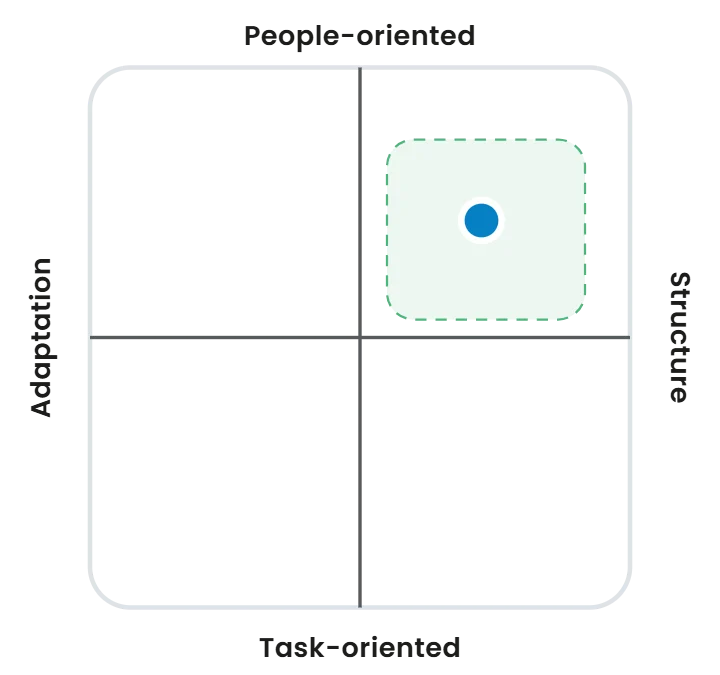
Candidate
Role target zone
Each role has its own combination of skills. The candidate’s position shows which skills they already have or can pick up quickly, and how close that is to what the role needs. Job groups are mapped to the O*NET and ESCO occupational frameworks.
Top brain preferences
The three preferences that come most naturally, with strengths to lean on and challenges to plan for.
Working style in plain language
A short read on skills, work style, and what a typical day looks like when the work suits this person.
Working with others
How this candidate complements colleagues with opposite preferences, useful for building balanced teams.
TMA Talent Assessment
How they are wired
Cognitive results tell you how someone thinks. The TMA Talent Assessment tells you what drives them and how they naturally behave with people, pace, and pressure. Together they give a full view of fit.
22
drives
44
talents
53
competencies
- About 30 minutes, forced-choice format
- Reports ready to use without a certification requirement
- Interview questions tailored to each candidate’s profile
- Results carry forward into onboarding and development through Talent Talks debriefs
Candidate surveys
How your process looks from the other side
Your hiring process is often a candidate’s first real experience of your culture. Short candidate surveys from TMA Performance show where applicants feel respected and informed, and where you lose them.
- Feedback from hired and declined candidates alike
- Insight by stage: application, assessment, interviews, offer
- Confidential responses, so candidates can be candid
- Clear priorities for improving the process over time
How it works
From job profile to confident offer
1
Profile the role
We work with you to define what the position actually demands: the thinking style, work style, and environment.
2
Invite candidates
Candidates are invited to complete the assessments online. Use BrainsFirst early for volume, the TMA Talent Assessment for finalists, or both.
3
Review the match
Hiring managers get clear reports and a side-by-side view of how each candidate fits the role.
4
Decide and onboard
Make the offer with evidence behind it, then use the same insight to set your new hire up to succeed.
Hire for how people think and how they are wired.
Tell us about the core positions you hire for most often. We’ll show you how assessments can fit into the process you already have.